Annonces
La réalité augmentée (RA) dans les technologies grand public a connu une évolution fulgurante au cours de la dernière décennie, transformant la manière dont les utilisateurs interagissent avec leurs appareils et le monde qui les entoure. Son intégration dans les technologies grand public du quotidien a révolutionné des secteurs tels que le jeu vidéo, le commerce de détail et l'éducation.
Initialement perçue comme un concept futuriste, la réalité augmentée est aujourd'hui un outil essentiel pour de nombreuses entreprises et consommateurs. Des applications mobiles aux objets connectés, la technologie de réalité augmentée enrichit l'expérience utilisateur grâce à des fonctionnalités immersives et interactives.
Cet article explore les principaux développements de la réalité augmentée (RA) et sa présence croissante dans les technologies grand public. Nous examinerons comment la RA remodèle différents secteurs et ce que l'avenir réserve à cette technologie révolutionnaire.
Les débuts de la réalité augmentée
Le concept de réalité augmentée a été introduit dans les années 1990, mais il était alors principalement limité à la recherche et aux applications expérimentales. Les premiers systèmes de RA nécessitaient un équipement encombrant et n'étaient pas accessibles au grand public.
Annonces
Malgré ces limitations, la réalité augmentée a suscité l'intérêt grâce à son potentiel de fusionner les mondes physique et numérique. Au début des années 2000, de grandes entreprises ont commencé à explorer la réalité augmentée dans les jeux vidéo et la publicité, jetant ainsi les bases d'innovations futures.
La véritable percée pour les applications grand public est survenue avec l'essor des smartphones et des tablettes, qui ont fourni le matériel nécessaire pour donner vie à la réalité augmentée dans des situations quotidiennes.
À mesure que la technologie de la réalité augmentée s'améliorait, elle devenait de plus en plus accessible aux consommateurs du monde entier.
+ Comment la technologie transforme l'éducation
Le rôle des smartphones dans l'évolution de la réalité augmentée
Les smartphones ont joué un rôle déterminant dans l'essor rapide de la réalité augmentée (RA) dans le domaine des technologies grand public. Grâce à leurs appareils photo, capteurs et processeurs performants, ils ont facilité le développement d'applications de RA accessibles au grand public.
L'un des premiers exemples les plus remarquables était Pokémon GoPokémon Go, qui a combiné la réalité augmentée et les jeux géolocalisés pour créer un phénomène mondial, a démontré le potentiel de la réalité augmentée dans le divertissement mobile.
Suite à cela, divers secteurs ont commencé à adopter la réalité augmentée pour des applications plus pratiques, telles que les essayages virtuels dans le commerce de détail et les systèmes de navigation interactifs.
La généralisation de la réalité augmentée sur les smartphones a ouvert la voie à de nombreuses applications innovantes qui étaient auparavant impensables.
+ L'impact de la technologie sur la vie quotidienne
La réalité augmentée dans le commerce de détail et le shopping
L'une des applications les plus importantes de la réalité augmentée dans les technologies grand public se trouve dans le commerce de détail. La réalité augmentée permet aux clients d'essayer des vêtements, du maquillage, voire des meubles sans avoir à les toucher physiquement.
Des entreprises comme IKEA ont développé des applications de réalité augmentée permettant aux utilisateurs de visualiser l'apparence des meubles dans leur intérieur avant de les acheter. De même, les marques de cosmétiques ont intégré la réalité augmentée à leurs applications pour permettre aux clients d'essayer virtuellement le maquillage.
L'utilisation de la réalité augmentée améliore non seulement l'expérience d'achat, mais contribue également à réduire le nombre de retours, car les clients sont mieux informés sur leurs choix.
De plus, la réalité augmentée dans le commerce de détail devrait connaître une croissance exponentielle à mesure que de plus en plus de marques reconnaissent son potentiel pour accroître l'engagement client et les ventes.
La réalité augmentée dans l'éducation et l'apprentissage
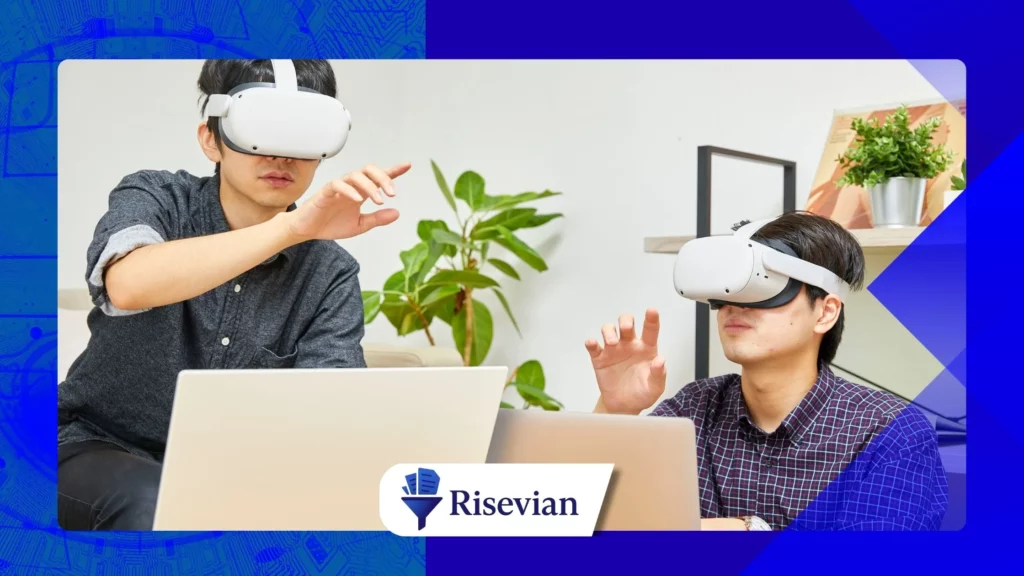
La réalité augmentée transforme l'éducation en offrant des expériences d'apprentissage immersives qui captivent les élèves d'une manière impossible avec les méthodes traditionnelles.
Grâce à la réalité augmentée, les élèves peuvent interagir avec des modèles 3D de sujets complexes, comme l'anatomie ou les monuments historiques, ce qui rend l'apprentissage plus dynamique et mémorable.
Par exemple, la réalité augmentée peut donner vie aux manuels scolaires, permettant aux élèves de visualiser les concepts en temps réel. Elle facilite également l'apprentissage à distance, en donnant accès à des classes virtuelles et à des leçons interactives.
Selon Magazine EdTechDe nombreux établissements d'enseignement adoptent de plus en plus la réalité augmentée pour renforcer l'engagement des étudiants et améliorer les résultats d'apprentissage.
L'avenir de la réalité augmentée dans les technologies grand public
L'avenir de la réalité augmentée dans les technologies grand public s'annonce extrêmement prometteur. À mesure que cette technologie progresse, on peut s'attendre à une intégration plus fluide dans les appareils du quotidien, tels que les objets connectés et les lunettes intelligentes.
Des entreprises comme Microsoft et Apple investissent déjà massivement dans la réalité augmentée pour leurs futurs produits. Par exemple, HoloLens de Microsoft et ARKit d'Apple repoussent les limites du possible en matière de réalité augmentée.
Dans les années à venir, la réalité augmentée devrait s'intégrer encore davantage aux médias sociaux, des plateformes comme Instagram et Snapchat développant continuellement leurs fonctionnalités de réalité augmentée.
Le potentiel de la réalité augmentée dans les technologies grand public est immense, avec des applications allant du divertissement et du commerce à la santé et bien plus encore. À mesure que cette technologie se perfectionne, elle deviendra sans aucun doute omniprésente dans notre quotidien.
| Applications de la réalité augmentée dans les technologies grand public | Impact sur l'industrie |
|---|---|
| Essayages virtuels (vêtements, maquillage, meubles) | Expérience d'achat améliorée |
| Outils d'apprentissage interactifs (modèles 3D, manuels scolaires) | Éducation engageante et immersive |
| Systèmes de navigation en réalité augmentée (cartes, itinéraires) | Expérience de voyage améliorée |
| Jeux en réalité augmentée (Pokémon Go, filtres AR) | Divertissement révolutionné |
| Applications de santé en réalité augmentée (formation chirurgicale, diagnostic) | Innovations dans le domaine de la santé |
Conclusion
En conclusion, l'évolution de la réalité augmentée (RA) dans les technologies grand public a été tout simplement révolutionnaire. Ce qui n'était au départ qu'un concept de niche est devenu un outil essentiel pour de nombreux secteurs, du commerce de détail à l'éducation, en passant par le divertissement et la santé.
À mesure que la technologie continue de s'améliorer, la réalité augmentée s'intégrera encore davantage à notre quotidien, offrant des expériences plus riches et plus immersives.
Avec des géants comme Apple et Microsoft à la pointe du progrès, il est clair que l'avenir de la réalité augmentée recèle un immense potentiel. Qu'il s'agisse d'améliorer l'expérience d'achat, de transformer l'éducation ou de révolutionner la santé, la réalité augmentée est appelée à continuer de façonner l'avenir des technologies grand public.
FAQ
1. Qu'est-ce que la réalité augmentée (RA) ?
La réalité augmentée (RA) est une technologie qui superpose du contenu numérique, comme des images ou des informations, au monde réel en temps réel grâce à des appareils comme les smartphones et les lunettes RA.
2. Comment la réalité augmentée est-elle utilisée dans le commerce de détail ?
Dans le secteur du commerce de détail, la réalité augmentée permet aux clients d'essayer virtuellement des vêtements, du maquillage et même des meubles, améliorant ainsi l'expérience d'achat et facilitant les décisions d'achat.
3. Comment la RA améliore-t-elle l'éducation ?
La réalité augmentée dans l'éducation crée des expériences d'apprentissage interactives et immersives, permettant aux élèves de visualiser des concepts complexes et d'interagir avec des modèles et des simulations 3D, rendant ainsi l'apprentissage plus dynamique.
4. Quel rôle joue la RA dans les jeux vidéo ?
La réalité augmentée dans les jeux vidéo permet aux joueurs d'interagir avec des personnages et des environnements numériques superposés au monde réel, offrant une expérience plus immersive et captivante, comme on peut le voir dans des jeux tels que Pokémon Go.
5. Quel avenir pour la réalité augmentée dans les technologies grand public ?
L'avenir de la réalité augmentée dans les technologies grand public est prometteur, avec des applications potentielles dans les objets connectés, les lunettes intelligentes, les médias sociaux, la santé et bien plus encore, faisant de la réalité augmentée une composante omniprésente de la vie quotidienne.
6. Comment la réalité augmentée améliore-t-elle l'expérience d'achat ?
La réalité augmentée améliore l'expérience d'achat en permettant aux clients de visualiser les produits dans leur propre espace ou de les essayer virtuellement avant de les acheter, réduisant ainsi l'incertitude et améliorant la prise de décision.
7. La réalité augmentée peut-elle être utilisée dans le domaine de la santé ?
Oui, la réalité augmentée est utilisée dans le domaine de la santé pour des applications telles que la formation chirurgicale, le diagnostic des patients et même les pratiques thérapeutiques, aidant ainsi les professionnels de la santé à améliorer leur précision et leur efficacité.
8. Quels appareils peuvent exécuter des applications de réalité augmentée ?
Les applications de réalité augmentée peuvent être exécutées sur divers appareils, notamment les smartphones, les tablettes, les lunettes de réalité augmentée et même les montres connectées, en fonction de la complexité de l'application et du matériel de l'appareil.
9. La RA est-elle la même chose que la réalité virtuelle (RV) ?
Non, la réalité augmentée superpose du contenu numérique au monde réel, tandis que la réalité virtuelle immerge les utilisateurs dans un environnement entièrement virtuel. Ces deux technologies sont distinctes, mais présentent des similitudes dans leur utilisation des expériences numériques interactives.
10. Quel est l'impact de la réalité augmentée sur les médias sociaux ?
La réalité augmentée transforme les médias sociaux en proposant des filtres interactifs, des effets virtuels et des expériences immersives, permettant aux utilisateurs d'interagir avec le contenu de manière innovante et d'améliorer leur présence en ligne.
+ L’impact de l’intelligence artificielle sur la sécurité des données